- Small Dog Place Home
- Diseases
- Worms in Dogs
Common Worms and Parasites in Dogs: Types, Risks, and Prevention
Written and reviewed by Janice Jones, Last Update, January 2026
Internal parasites are common in dogs and include a range of organisms that live in the intestines, bloodstream, or other internal tissues. While the idea of worms and parasites can be uncomfortable to think about, understanding how these organisms affect dogs is an important part of responsible pet care.
Dogs may be exposed to parasites in a variety of everyday situations, including contact with contaminated soil, feces, fleas, wildlife, or infected animals. Some parasites are more common in puppies, while others affect dogs of any age. Many infections cause mild or no symptoms, but others can lead to illness if left untreated.
This page provides an overview of the most common worms and internal parasites that affect dogs. Not all of the organisms discussed here are technically worms—some are protozoa or blood-borne parasites—but they are often grouped together because they are diagnosed, treated, and prevented within routine veterinary care.
Each section below explains what these parasites are, how dogs are exposed to them, and why prevention and regular veterinary testing are important.
This page is part of our broader guide to common small dog diseases.
Common Worms and Internal Parasites in Dogs
Roundworms
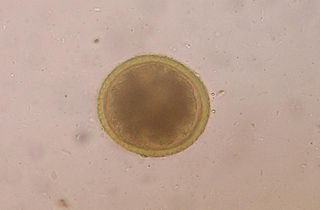 This is a microscopic image of a roundworm egg.
The most common form of intestinal parasite is the roundworm. Animals with roundworms pass the infection to others when they shed the worm’s eggs in their stool.
Other animals will eat the infected feces, walk on it and lick their paw, or drink contaminated water. Mothers can pass the infections onto their puppies either before birth or during nursing.
Infected animals can have serious health problems including malnutrition and intestinal issues including diarrhea. Infected animals pose a risk to people because the eggs can be accidentally eaten or enter through the skin.
Children are at greatest risk especially if
they play in areas with infected feces.
If untreated in people, the larval forms can eventually enter organs and
other tissues resulting in damage.
The best way to prevent and treat roundworms is to begin in puppyhood. Puppies should be wormed at 2, 4, 6, and 8 weeks of age and then placed on a heartworm preventative. The heartworm medicine will also control many different intestinal parasites including roundworms.
During the dog's yearly visit to the veterinarian, a fecal sample can be checked for worms at the same time as the dog is tested for heartworms.
Hookworms
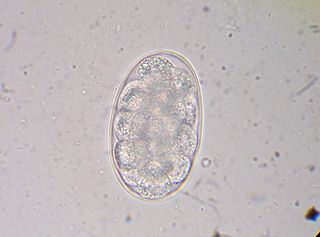 Microscopic photo of a Hookworm egg.
Hookworms are also common in dogs and can be especially dangerous because they burrow into the intestinal lining and suck blood. If untreated, hookworm infestations can be serious, resulting in blood loss, weakness, and malnutrition.
Sadly, humans can also be affected when larvae penetrate the skin. If hookworm larvae penetrate the skin, they can cause "cutaneous larval migrans", a potentially serious and scarring inflammation. These infections often occur when people walk barefoot in contaminated areas or garden in areas where pets and other dogs have deposited their feces.
The larvae produce severe itching and tunnel-like red areas as they pass through the skin. Symptoms that the dog may show include bloody diarrhea, weight loss, anemia, and progressive weakness.
Whipworms
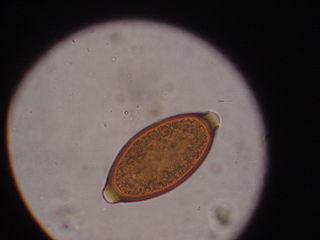 Microscopic Photo of a Whipworm Egg
Whipworms pass their eggs in the feces and other animals become infected by eating infected soil or licking areas of their bodies that have come into contact with the whipworm eggs.
Whipworms are similar to hookworms in so far as they bury their heads into the lining of the dog’s intestine and such blood, but are not as harmful as the hookworm. The Whipworm lives in the first section of the dog’s large intestine called the cecum and are often more difficult to detect because they shed few eggs.
Some of the symptoms that a dog with whipworms may display include chronic weight loss, and feces that seems to have a light ring of mucus and blood.
You can prevent whipworms by maintaining a strict cleaning schedule. Remove feces from your yard as soon as possible. Don't neglect the yearly checkup for your dog and collect a stool sample to take along. Many whipworm infections are more difficult to diagnosis and the only way to assure your dog does not have these worms is to have negative fecal test results.
Whipworms rarely infect humans.
Tapeworms
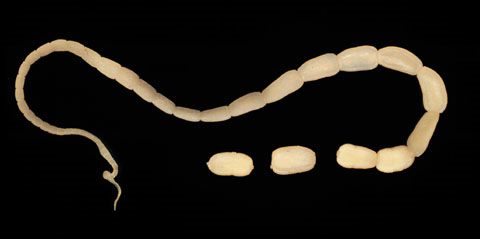 Adult Tapeworm Showing Individual Segments
This long flat worm consists of segments that can break off and pass in the dog's stool. These long flat worms can continue to grow reaching lengths of between six and 24 inches. They attach themselves to the intestines where their egg packets break off and are passed in the feces. This is where you might notice that your dog has tapeworms.
They appear like small grains of rice or seeds. Each little segment has its own reproductive system. You may see these small segments in the dog's feces or they may stick to the hair around the tail.
There are several types of tapeworms that affect dogs and each one has a different way that can get passed onto the dog. Tapeworms need an intermediary host to complete their life cycle.
For example, Dipylidium caninum is a tapeworm that needs fleas to be passed on whereas other tapeworms must use small animals such as rodents or larger animals such as deer or sheep.
They can also get certain types of tapeworms by eating infected rodents. They look like flattened grains of white rice. People do not generally get dog tapeworms.
The only way to prevent dogs from getting tapeworms is to avoid coming into contact with the intermediary host (fleas or other animals with tapeworm infections)
Flea control is the best way as the most common dog tapeworms use fleas as their intermediary host.
Most tapeworms do not produce severe symptoms in dogs as the other types of intestinal worms. Many people believe that a dog who scoots his rear along the ground is infected with tapeworms. This is not so. Scooting is caused by anal gland problems.
People can get tapeworm infections, but they are rare.
Coccidia
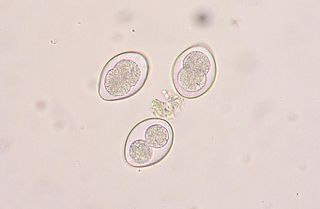 Coccidia oocysts were taken under magnification.
Coccidia are single celled parasites that can only be seen under a microscope. The dog becomes infected by eating infected soil or licking contaminated paws or fur.
Once inside the pet, coccidia damage the lining of the intestine keeping your dog from absorbing nutrients.
Symptoms include watery, bloody diarrhea. Dehydration is also likely. Medicines can be given to prevent the parasite from multiplying and allow time for your pet’s immune system to kill the parasite.
Read More about Coccidia in Dogs
Giardia
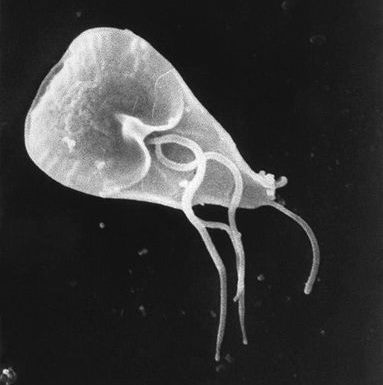 A scanned electron micrograph if Giardia
Giardia in dogs is another annoying parasite that can affect your dog’s health. They are not worms in dogs, but small protozoan, Giardia is not a worm, but a one-celled organism that is also capable of causing harm in many animals including people, although it’s not entirely clear how common the transmission is between dogs and people.
Once apart of your environment, its hard to get rid of, but there are treatment options available.
Read more about giardia in dogs.
Heartworms

All of the parasites on this page so far live in the intestinal tract of your dog. Heartworms, as the name implies, are different. Heartworms live in the dog's heart and surrounding large blood vessels.
This is a serious condition that requires specialized veterinary treatment. The good news is that it is entirely preventable by giving the dog a once-monthly medication by mouth.
Risk Factors for Common Worms in Dogs
Certain situations increase a dog’s risk of exposure to intestinal parasites. While not every dog in these situations will become infected, awareness of these risk factors can help owners take preventive steps.
Newborn Puppies
Roundworm larvae can remain dormant in adult dogs and become active during pregnancy. Puppies may be exposed before birth or through their mother’s milk, which is why routine deworming is recommended early in life.
Contact with Contaminated Soil:
Roundworm eggs and hookworm larvae can survive in soil. Dogs may be exposed while walking, playing at dog parks, or spending time in outdoor areas where infected animals have defecated.
Fleas
Some tapeworms require fleas to complete their life cycle. Dogs may become infected if they ingest a flea while grooming or scratching.
Hunting or Eating Wildlife
Dogs that hunt or scavenge may be exposed to parasites carried by rodents or other wildlife.
Diagnosis of Common Worms in Dogs
Accurate diagnosis is important because different parasites require different treatments. While some signs of infection may be visible, most parasites cannot be reliably identified without veterinary testing.
Intestinal Parasites
A veterinarian can diagnose most intestinal worms by examining a fresh fecal sample under a microscope. This test looks for parasite eggs or cysts and is commonly performed during routine wellness visits or when a dog shows gastrointestinal symptoms.
Tapeworms
Tapeworms are sometimes identified when small segments are seen in the dog’s stool or around the anus. These segments often resemble grains of rice. While this observation can suggest tapeworm infection, veterinary confirmation is still recommended to determine the species and appropriate treatment.
Heartworms
Heartworm disease is diagnosed using a blood test that detects heartworm antigens. This test is typically performed annually, even in dogs receiving preventive medication, because early detection improves treatment outcomes.
Giardia
Giardia can be more difficult to detect than other intestinal parasites because cysts are not shed consistently. Veterinarians may use specialized fecal tests, such as antigen testing or repeated fecal exams, when Giardia is suspected based on symptoms and history.
Because some dogs carry parasites without obvious symptoms, routine veterinary screening and fecal testing are important, even in apparently healthy dogs. This is often done during your yearly vet visit.
Treatment for Common Worms in Dogs
Treatment for worms and other intestinal parasites in dogs depends on the specific parasite involved, the dog’s age, overall health, and the severity of the infection. A veterinarian should always confirm the diagnosis before treatment begins, as different parasites require different medications.
Many parasitic infections are treatable, but no single medication treats all worms or parasites. Your veterinarian will determine the safest and most effective treatment plan for your dog.
Coccidia
Coccidia infections are typically treated with prescription medications that limit parasite reproduction and allow the dog’s immune system to clear the infection.
Commonly used medications may include sulfadimethoxine or trimethoprim-sulfamethoxazole combinations. In some cases, a veterinarian may recommend other antiparasitic medications.
Supportive care, including hydration and dietary management, may also be necessary, especially in young puppies or dogs with severe diarrhea.
Roundworms and Hookworms
Roundworms and hookworms are commonly treated with deworming medications containing ingredients such as pyrantel pamoate or fenbendazole. These medications are often administered in multiple doses to ensure all stages of the parasite are addressed.
Puppies are typically treated on a scheduled deworming protocol beginning at a young age. Adult dogs are usually treated based on fecal test results and risk factors.
Whipworms
Whipworm infections may require repeated treatments over several months due to the parasite’s long life cycle and environmental resistance. Medications containing fenbendazole are commonly used, along with follow-up fecal testing to confirm clearance.
Tapeworms
Tapeworm treatment depends on the species involved. Some tapeworms respond to fenbendazole, while others require medications containing praziquantel. Identifying the type of tapeworm is important, as treatment effectiveness varies by species.
Because fleas can transmit certain tapeworms, effective flea control is an essential part of prevention and long-term management.
Giardia
Giardia infections may be treated with medications such as fenbendazole or metronidazole, depending on the dog’s symptoms and test results. Treatment decisions are often individualized, as some dogs carry Giardia without showing signs of illness.
Environmental management, bathing, and sanitation are important parts of treatment to reduce reinfection.
Heartworms
Heartworm disease requires a specialized treatment protocol and should only be managed by a veterinarian. Treatment is more complex, costly, and carries greater risk than prevention. Monthly heartworm prevention medications are the safest and most effective way to protect dogs from this disease.
Dogs diagnosed with heartworm disease will require diagnostic testing, activity restriction, and carefully monitored treatment.
Never administer parasite medications without veterinary guidance, and do not use products intended for one parasite to treat another unless directed by a professional.
Prevention of Common Worms in Dogs
Preventing intestinal parasites focuses on reducing exposure and maintaining routine veterinary care. No single step is foolproof, but consistent habits significantly lower risk.
- Practice good sanitation: Promptly remove feces from yards, kennels, and play areas to limit environmental contamination.
- Use flea control when appropriate: Preventing fleas helps reduce the risk of tapeworm infections, as some tapeworms rely on fleas to complete their life cycle.
- Limit scavenging and hunting: Discourage dogs from eating wildlife, raw meat, or carrion, which can expose them to parasites.
- Maintain routine veterinary care: Regular fecal testing and veterinarian-recommended parasite prevention help detect infections early and reduce spread.
- Follow puppy deworming guidelines: Young puppies are at higher risk and benefit from scheduled deworming during early development.
Can People Catch Worms or Parasites From Dogs?
Some parasites that infect dogs can infect people, but transmission from dogs to humans is uncommon when basic hygiene and preventive care are followed. Diseases that can be transmitted between animals and people are called zoonotic infections.
Most people who live with dogs will never become infected with a parasite from their pet. When human infections do occur, they are usually associated with environmental exposure, poor sanitation, or accidental ingestion or skin contact with contaminated soil rather than direct contact with a dog.
Young children, people with weakened immune systems, and individuals who have frequent contact with contaminated environments may have a higher risk of exposure. Routine veterinary care, parasite prevention, and good hygiene greatly reduce this risk.
Parasites With Zoonotic Potential
The following parasites are occasionally associated with human infection under specific conditions:
Roundworms
Roundworms can pose a risk to people if microscopic eggs are accidentally ingested from contaminated soil or surfaces. In rare cases, larvae may migrate through human tissues, a condition known as toxocariasis. Children are more vulnerable because of hand-to-mouth behaviors, especially when playing in areas contaminated with feces.
Hookworms
Hookworm larvae may penetrate human skin through direct contact with contaminated soil or sand, such as walking barefoot. This can cause a skin condition called cutaneous larva migrans, which is uncomfortable but typically self-limiting with proper medical care.
Tapeworms
Human infection with dog tapeworms is rare. In the most common form, infection may occur if a person accidentally ingests an infected flea. This is uncommon and primarily seen in young children.
It is important to note that casual contact, petting, or sharing living space with a dog does not typically result in parasite transmission.
Protect Yourself and Family From These Parasites
To protect yourself and your family, the best preventative is good hygiene, which means:
- Wash your hands frequently
- Keep sandboxes covered
- Do not allow children to play in areas likely to be contaminated
- Wear shoes when outdoors.
- Treat fleas on your dog and your environment
- If you suspect that you or a loved one has become infected, contact your health care provider. DO NOT use veterinary worm medicines.
Photographs on this page are courtesy of Creative Commons
Further Reading About Worms in Dogs
More About Janice (author and voice behind this site)
Janice Jones is a small dog specialist with a background in grooming, training, and animal behavior, combining hands-on breeding experience with degrees in psychology and counseling psychology. She has spent 50 years owning and caring for small dogs and 15 years breeding, with early work in veterinary hospitals and shelters, assisting with surgery, lab work, and client care. She shares practical advice at SmallDogPlace.com and across social platforms. A lifelong Shih Tzu enthusiast, she now works alongside her dogs, who rarely leave her side. Visit my " About Me " page for more details.
She is the creator of SmallDogPlace.com, MiracleShihTzu.com, and Smart-Knit-Crocheting.com. A lifelong Shih Tzu enthusiast, she now works alongside her dogs, who rarely leave her side.

Free Monthly Newsletter
Sign Up for Our Free Newsletter and get our Free Gift to You.
my E-book, The Top 10 Mistakes People Make When Choosing a Dog (and how to avoid them)